Sahara
Sahara is a series of handmade contemporary objects and tableware formed from stone granulate and embedded terrazzo elements, exploring the tension between function, surface and sculptural form.
The series is rooted in materiality. Each piece begins with a mineral-based mixture that is poured, shaped, sanded and finished by hand, allowing subtle irregularities to remain visible rather than being erased. The terrazzo fragments become part of that language — appearing like traces, interruptions or small geological moments held inside the surface.
Although the objects are functional, Sahara is not interested in utility alone. Bowls, trays, vessels and table pieces are treated as small sculptural compositions, balancing weight, proportion, texture and color. Their forms remain reduced and calm, while the material itself carries movement and detail.
The handmade process means that no two pieces are completely identical. Variations in grain, distribution, surface and pigment are not considered imperfections, but part of the identity of each object. The result is a collection that feels tactile, grounded and quietly individual.
Visually, the series draws on the language of stone, sediment and fragmented landscapes. Soft mineral tones meet sharper terrazzo inclusions, creating surfaces that feel at once contemporary and almost archaeological.
At its core, Sahara is about transforming raw material into objects that sit somewhere between everyday use and sculpture — pieces made to be touched, used and lived with, while still carrying the presence of the hand that made them.
A study in texture, weight and quiet permanence.
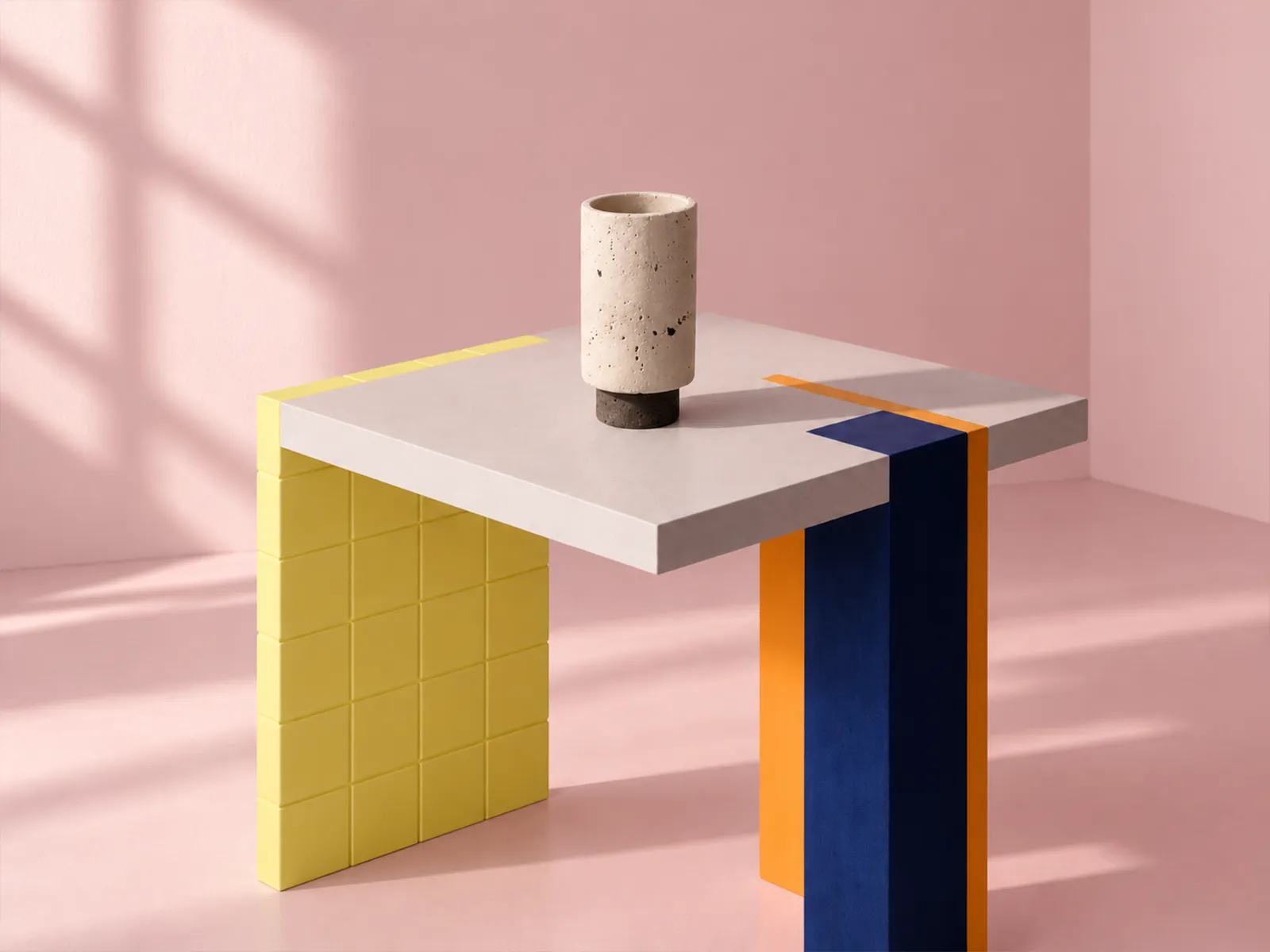
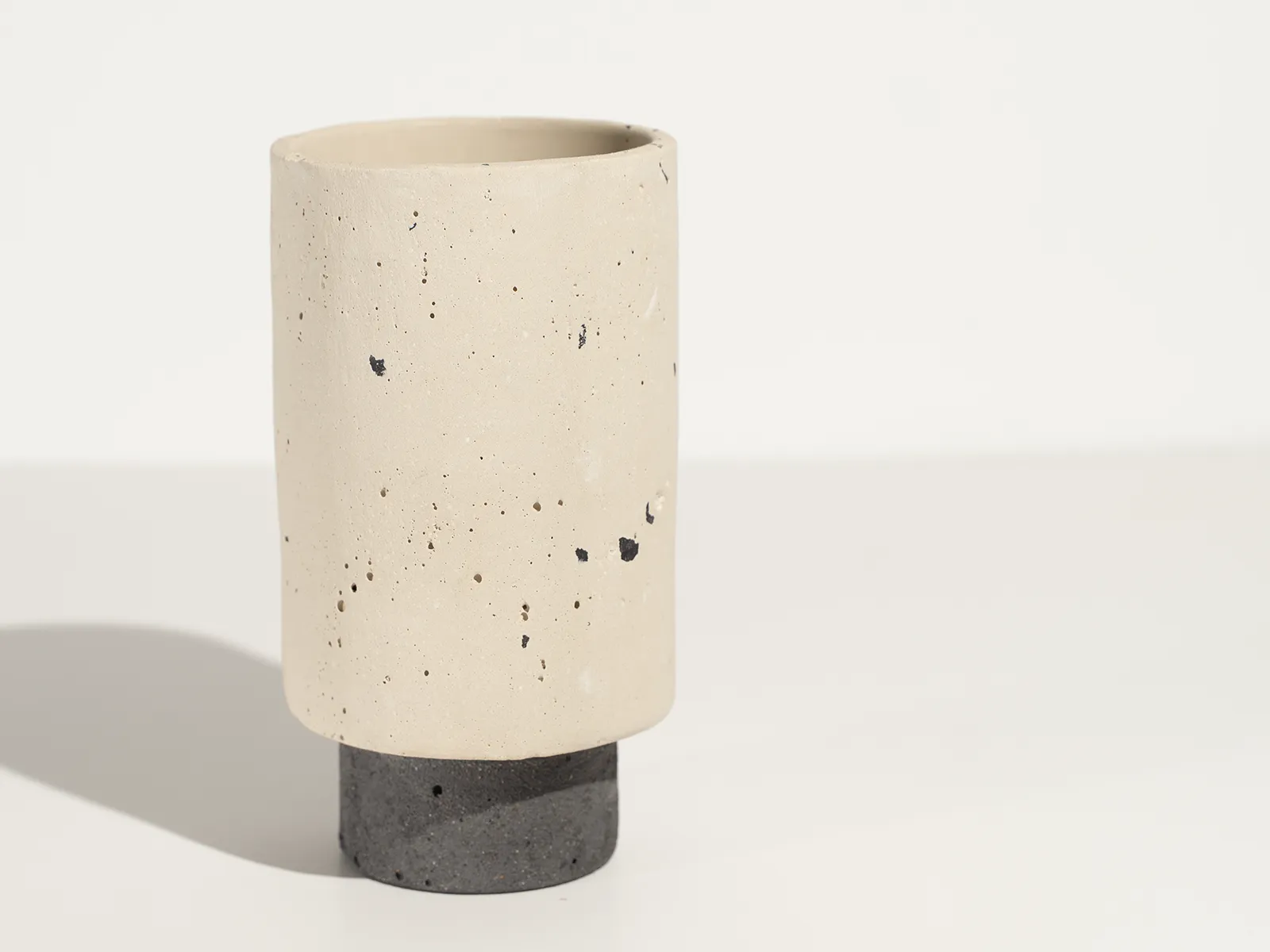
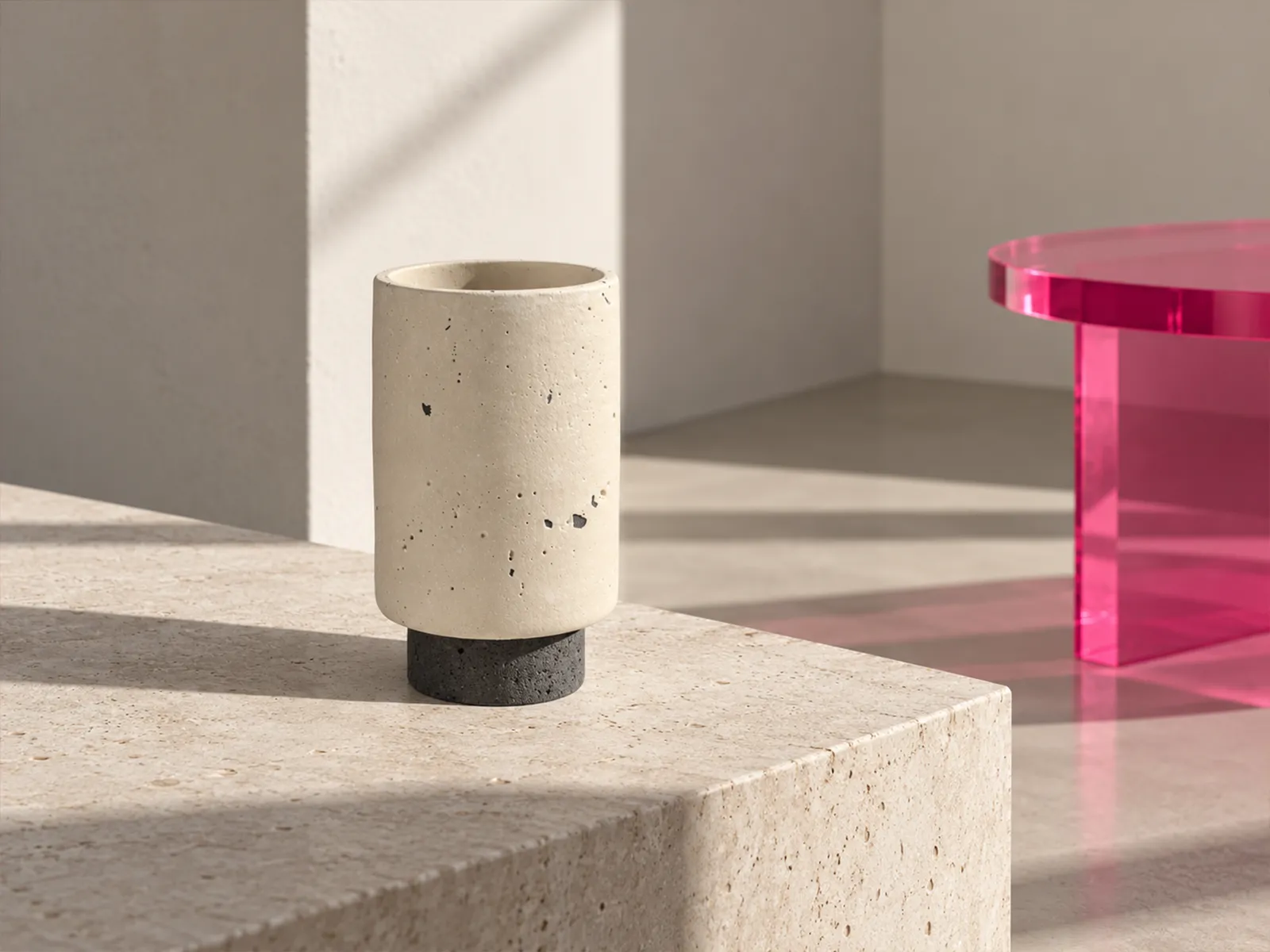
Sahara # 01
Handcrafted Jesmonite vase.
Terrazzo body, black stone-granulate base.
Custom dimensions available upon request.
( Love at first Sight? )
Terrazzo body, black stone-granulate base.
Custom dimensions available upon request.
Sahara # 01
Handcrafted Jesmonite vase.
Terrazzo body, black stone-granulate base.
Custom dimensions available upon request.
( Love at first Sight? )
Terrazzo body, black stone-granulate base.
Custom dimensions available upon request.
Sahara
Sahara is a series of handmade contemporary objects and tableware formed from stone granulate and embedded terrazzo elements, exploring the tension between function, surface and sculptural form.
The series is rooted in materiality. Each piece begins with a mineral-based mixture that is poured, shaped, sanded and finished by hand, allowing subtle irregularities to remain visible rather than being erased. The terrazzo fragments become part of that language — appearing like traces, interruptions or small geological moments held inside the surface.
Although the objects are functional, Sahara is not interested in utility alone. Bowls, trays, vessels and table pieces are treated as small sculptural compositions, balancing weight, proportion, texture and color. Their forms remain reduced and calm, while the material itself carries movement and detail.
The handmade process means that no two pieces are completely identical. Variations in grain, distribution, surface and pigment are not considered imperfections, but part of the identity of each object. The result is a collection that feels tactile, grounded and quietly individual.
Visually, the series draws on the language of stone, sediment and fragmented landscapes. Soft mineral tones meet sharper terrazzo inclusions, creating surfaces that feel at once contemporary and almost archaeological.
At its core, Sahara is about transforming raw material into objects that sit somewhere between everyday use and sculpture — pieces made to be touched, used and lived with, while still carrying the presence of the hand that made them.
A study in texture, weight and quiet permanence.
The series is rooted in materiality. Each piece begins with a mineral-based mixture that is poured, shaped, sanded and finished by hand, allowing subtle irregularities to remain visible rather than being erased. The terrazzo fragments become part of that language — appearing like traces, interruptions or small geological moments held inside the surface.
Although the objects are functional, Sahara is not interested in utility alone. Bowls, trays, vessels and table pieces are treated as small sculptural compositions, balancing weight, proportion, texture and color. Their forms remain reduced and calm, while the material itself carries movement and detail.
The handmade process means that no two pieces are completely identical. Variations in grain, distribution, surface and pigment are not considered imperfections, but part of the identity of each object. The result is a collection that feels tactile, grounded and quietly individual.
Visually, the series draws on the language of stone, sediment and fragmented landscapes. Soft mineral tones meet sharper terrazzo inclusions, creating surfaces that feel at once contemporary and almost archaeological.
At its core, Sahara is about transforming raw material into objects that sit somewhere between everyday use and sculpture — pieces made to be touched, used and lived with, while still carrying the presence of the hand that made them.
A study in texture, weight and quiet permanence.